
Inaugural Invitational Advisory Council | Victor Wang
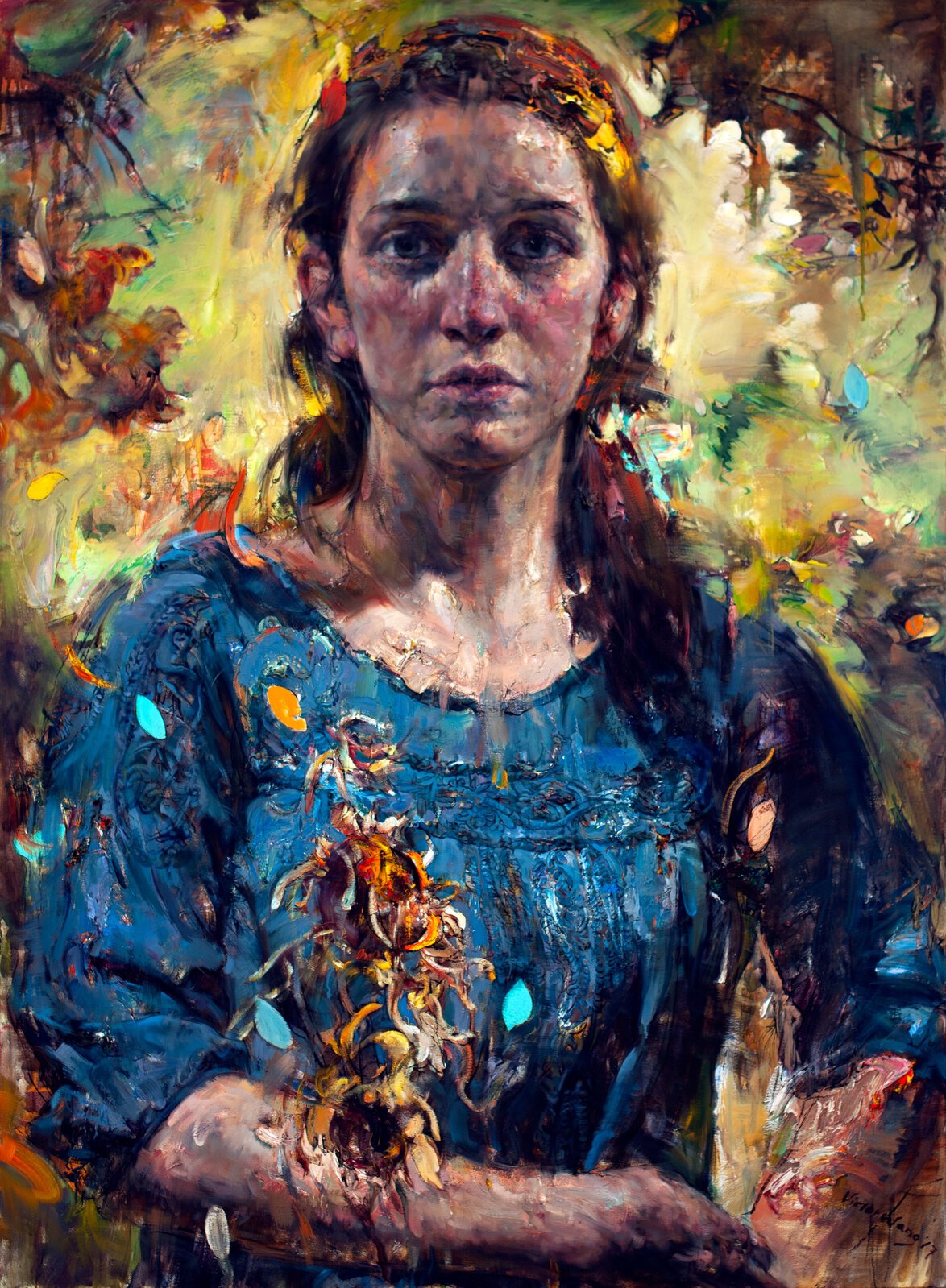
Victor Wang, Falling Leaves, Oil on Canvas, 65 × 48 in.
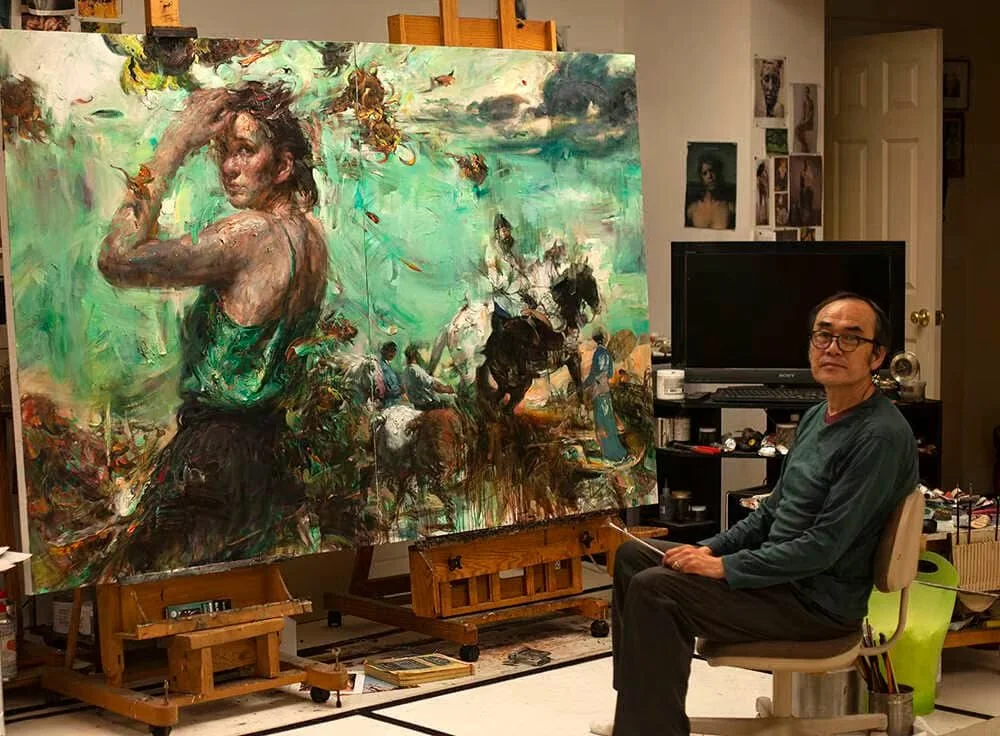
Victor Wang is a Chinese American contemporary figurative painter, draftsman, and educator whose work fuses rigorous academic training with a sculptural approach to oil paint. Raised in China, he earned his BFA in oil painting from the Lu Xun Academy of Fine Arts, where the curriculum emphasized drawing, the human figure, and methods derived from nineteenth-century French and Russian academic traditions. After graduating, he remained at Lu Xun as an Assistant Professor of Painting and Drawing for four and a half years. He later held visiting-scholar appointments at the University of Illinois and Washington University before earning his MFA from Fontbonne.
Wang spent more than three decades on the faculty of Fontbonne, ultimately serving as Professor in Painting and Drawing. His teaching included life-size figure drawing, color theory, classical oil painting technique, figurative art history, and graduate seminar and critique. This experience gives him particular authority in analyzing anatomy, draftsmanship, composition, technique, and expressive intent.
Wang’s figures inhabit psychologically charged moments shaped by memory, migration, loss, renewal, and the emotional residue of the past. Sunflowers recur as personal symbols of sorrow and joy, while collaged figures drawn from China’s Tang Dynasty connect the painted present to his cultural heritage. Inspired in part by his father’s work as an actor and stage director, Wang uses theatrical light to heighten the emotional presence of his subjects. Influenced by Rodin’s modeling of clay, he builds illuminated forms through heavy impasto while handling shadows more transparently, sustaining a deliberate tension between realism and abstraction.
His solo exhibition record includes two exhibitions at New York’s Arcadia Gallery and an exhibition spanning two floors of Taiwan’s Yu-Hsiu Museum of Art. In 2024, he received First Prize in the RAYMAR Traditional Art Award category of the Beautiful Bizarre Art Prize. His academic foundation, technical innovation, symbolic fluency, and critique-based teaching experience give him exceptional authority in evaluating figurative, narrative, and psychologically complex representational art.